You're Not Behind — You're Just Watching Someone Else's Highlight Reel on Repeat
The Comparison That's Quietly Wrecking You
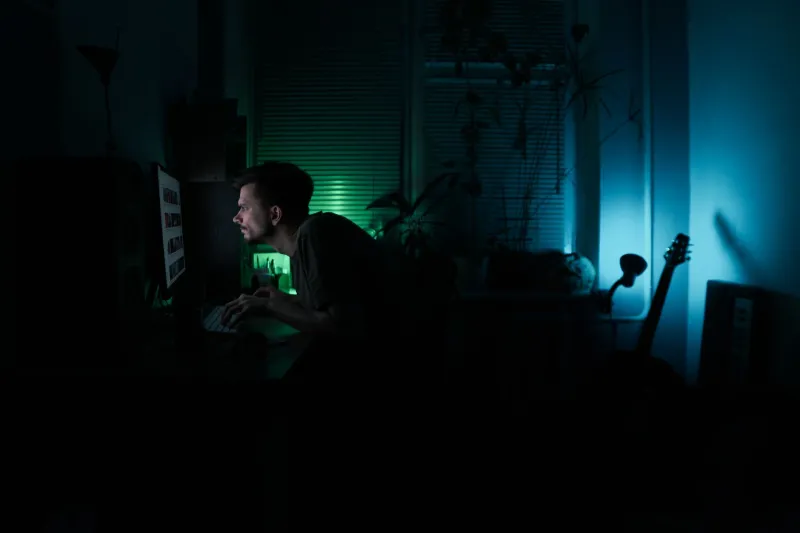
Somewhere between scrolling Instagram at midnight and watching another creator's polished launch video, something sneaky happens. Your brain starts running the numbers. Their aesthetic versus yours. Their engagement versus yours. Their apparent ease versus the grinding, uncertain, occasionally humiliating reality of your own process.
And then comes the conclusion that feels so logical it almost makes sense: You're falling behind.
Except you're not falling behind. You're falling for one of the oldest tricks in the creative world — comparing your raw, unfinished, still-figuring-it-out work to someone else's carefully curated, years-in-the-making result. That's not a fair comparison. That's not even a real comparison. That's just a story you're telling yourself at the worst possible time of night.
Let's talk about why this happens, what it's actually costing you, and how to build a measuring system that tells you the truth instead of just making you feel inadequate.
The Invisible Decade Behind the 'Overnight Success'
Here's something nobody puts in their launch email: almost every creator whose work looks effortless has a graveyard of terrible early work they'd rather you never find.
The designer with the immaculate brand aesthetic spent years making things that looked like clip art. The writer whose essays feel like they just flow wrote hundreds of clunky, overwrought pieces before they found their voice. The entrepreneur with the seamless course funnel failed three products before they understood their audience well enough to build something that actually sold.
You don't see any of that. What you see is the tenth iteration — sometimes the twentieth — stripped of all the stumbling and second-guessing that got them there. The internet is essentially a greatest hits collection. Nobody posts their B-sides.
So when you stack your current work against what you're seeing from people further down the road, you're not doing a comparison. You're doing something closer to watching a professional athlete's Olympic performance and then being confused about why your Tuesday morning jog felt harder.
Why Your Brain Is Wired to Get This Wrong
This isn't a personal failing. It's actually pretty standard human cognition doing what it does — using available information to make quick assessments. The problem is that the available information is wildly incomplete.
When we see someone else's work, we see the output. When we experience our own work, we live inside the entire messy process — the false starts, the pivots, the moments of genuine doubt, the drafts that went nowhere. That internal experience feels like evidence of inadequacy. Their polished output feels like evidence of their superiority.
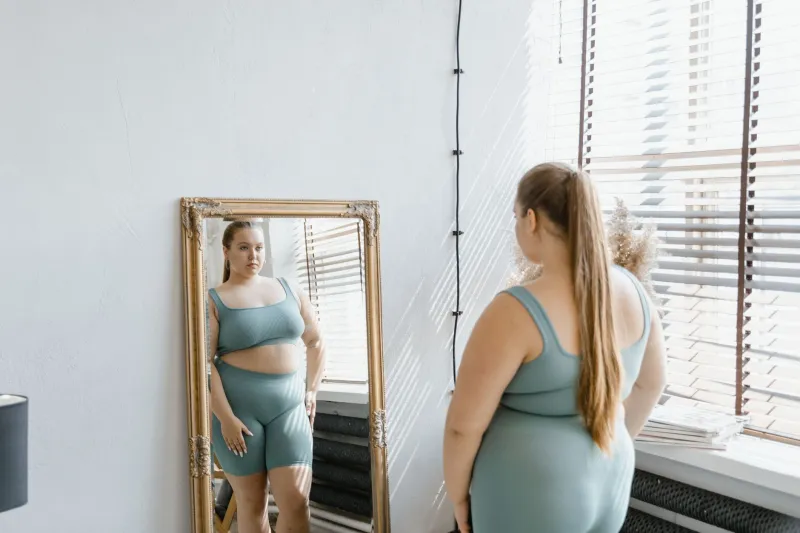
But you're not comparing apples to apples. You're comparing your kitchen — flour on the counter, dishes in the sink, something burning slightly — to a photograph of their finished meal plated perfectly under good lighting. Of course yours looks worse. The contexts aren't remotely the same.
Psychologists call some version of this the "iceberg illusion" — the idea that we only see the visible tip of someone else's effort while assuming the rest doesn't exist. For creators especially, this illusion is almost constant. And it does serious damage to the willingness to keep going.
Building a Measuring System That Actually Works
So if comparing yourself to others is rigged from the start, what do you measure against?
The answer is almost embarrassingly simple: yourself, six months ago.
Pull up something you made six months back. A year ago if you can stomach it. Look at it honestly — not to cringe, but to actually register the distance you've traveled. Most creators are so focused on the gap between where they are and where they want to be that they completely ignore the gap they've already closed.
That closed gap is real data. It's proof that your process is working, even when it doesn't feel like it.
Here are a few other metrics worth tracking that have nothing to do with anyone else:
Consistency over time. Are you showing up more regularly than you used to? That's growth, even if the work itself hasn't visibly improved yet. Consistency is the infrastructure everything else gets built on.
Your relationship with the discomfort. Early on, uncertainty feels paralyzing. As you develop, it starts to feel more like signal — a sign you're pushing into new territory. If hard creative decisions feel less catastrophic than they used to, that's evolution.
The complexity of the problems you're solving. If you're wrestling with more sophisticated creative questions than you were a year ago, you've leveled up. Beginners worry about whether something is good enough to share. More developed creators worry about whether they're saying something true. That shift matters.
How fast you recover. Creative setbacks are universal. What changes over time is how quickly you get back to work. If your recovery time is shrinking, you're building resilience — which is honestly one of the most underrated creative skills there is.
The Real Competition Nobody Talks About
Here's the reframe that tends to stick: the only real competition in creative work is the version of you that decided it wasn't worth continuing.
Every time you keep going when it feels pointless, you beat that version. Every time you finish something imperfect instead of abandoning it, you beat that version. Every time you put something out into the world and survive the vulnerability of it, you beat that version.
The creators you're comparing yourself to? Most of them are doing the exact same comparison in a different direction — stacking themselves against someone further ahead and feeling the same low-grade panic you feel. It's comparisons all the way up.
The ones who actually break through aren't the ones who win the comparison game. They're the ones who eventually stop playing it.
Give Yourself the Full Timeline
Your creative evolution is not a straight line and it is definitely not fast. It's iterative, nonlinear, and full of periods where nothing seems to be happening — right before something shifts.
The work you're making right now is not your final form. It's not supposed to be. It's the necessary step between where you were and where you're going, and it deserves to be treated as exactly that — not as evidence that you're failing to be someone else, but as proof that you're becoming more fully yourself.
Stop measuring your rough draft against their tenth iteration. Start measuring your tenth iteration against your first one.
The gap you find there is the only number that actually matters.