Their Best Day Isn't Your Measuring Stick
The Scroll That Kills Your Momentum
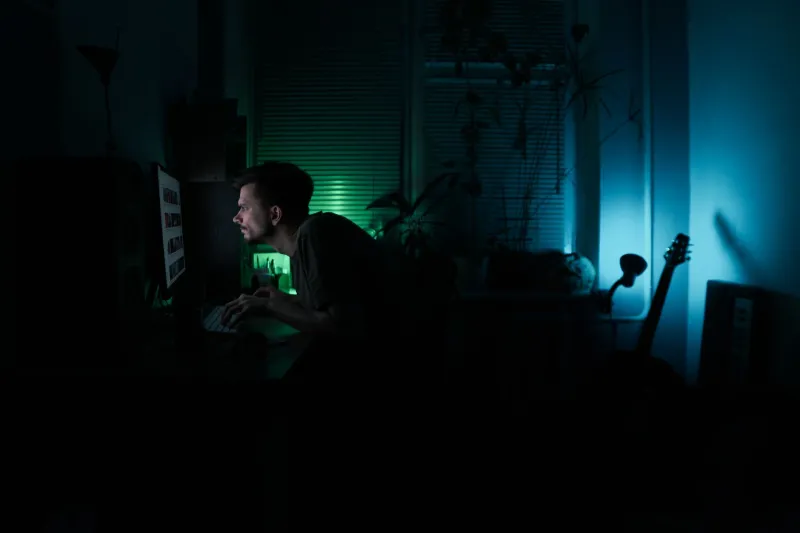
It usually happens late at night. You're working on something — a project, a pitch, a piece of writing — and it's going okay but not great. So you take a "quick break" and open Instagram, LinkedIn, or whatever platform currently has its hooks in you. And then you see it.
Someone you went to school with just landed a massive client. A creator you follow casually just dropped a campaign that looks like it cost a million dollars. A peer in your industry published something that makes your current work feel like a napkin sketch.
Suddenly, okay-but-not-great becomes terrible. And the project you were making progress on ten minutes ago now feels pointless.
This is the comparison trap. And if you're a creative professional in the US right now — where hustle culture and personal branding are practically civic duties — you're probably falling into it more often than you realize.
Why Your Brain Is Wired to Do This
Here's the uncomfortable truth: comparison isn't a character flaw. It's actually a deeply human survival mechanism. Social comparison theory, first introduced by psychologist Leon Festinger back in the 1950s, suggests that humans naturally evaluate themselves against others to understand where they stand. In small communities, this was useful. You'd look at the person next to you and gauge whether you were keeping pace.
The problem is that your brain hasn't updated its software for the internet age. Instead of comparing yourself to your actual neighbors or immediate peers, you're now measuring yourself against a globally curated highlight reel of everyone's best moments, best work, and best lighting.
You're not seeing the three years of failed pitches before the big win. You're not seeing the creative block that preceded the viral post. You're not seeing the team of ten people behind the solo creator's "personal" project. You're seeing the result — stripped of all its messy, unglamorous context — and treating it like a baseline you should already be at.
That's not a fair fight. And yet we keep signing up for it.
The Specific Way It Sabotages Your Work
Comparison doesn't just make you feel bad. It actively messes with your creative output in a few specific ways.
It makes you derivative. When you're constantly benchmarking against what's already out there, you start unconsciously chasing aesthetics, formats, and ideas that already exist. You stop asking "what do I actually want to make?" and start asking "what does successful work look like right now?" The result is work that feels like a slightly worse version of something that already exists.
It freezes your timing. Comparison creates a false urgency that paradoxically leads to paralysis. You feel like you're behind, which makes you rush, which makes you second-guess, which makes you stall. You end up doing nothing while feeling like you should be doing everything.
It distorts your progress. When someone else's year-five work becomes your year-one benchmark, you lose the ability to accurately assess your own growth. You can't see how far you've come because you're too busy measuring how far you still have to go by someone else's trajectory.
Reframing Inspiration Before It Becomes Intimidation
None of this means you should stop paying attention to what other people are creating. That would be its own kind of creative isolation. The goal isn't to go dark — it's to change the relationship.
Here's a framework worth trying.
Ask what it activates, not what it achieves. When you see work that stops you in your tracks, instead of immediately clocking how it's better than yours, ask yourself what it makes you want to do. Does it make you want to write? To experiment with a new format? To revisit an old idea? That activation is the useful part. The achievement — the finished, polished thing you're looking at — is just the trigger. Follow the feeling, not the finish line.
Separate the person from the output. The creator you're envying is not their best work. They're also their worst work, their abandoned projects, their imposter syndrome at 2am, their rejected ideas. You're a whole person too. Give yourself the same complexity you'd give them if you actually knew them.
Set a reference point that's actually relevant. Compare yourself to yourself six months ago. That's a fair fight. Pull up an old project, an early draft, a piece you made when you were just starting to figure things out. That's the comparison that tells you something real about your trajectory.
Using the Highlight Reel as a Starting Point
There's a version of comparison that's genuinely useful — and it looks less like measuring and more like mapping.
When you encounter work you admire, it's okay to reverse-engineer it. Study the structure. Understand the choices. Figure out what makes it land. But then — and this is the part most people skip — translate those observations into your own language. Don't replicate the output. Internalize the principle and express it in a way that only you can.
Every creative person you admire did exactly this. They weren't born fully formed. They consumed, absorbed, processed, and then made something that was distinctly theirs. The highlight reel you're intimidated by was itself built on a foundation of inspiration borrowed from someone else's highlight reel.
You're allowed to be somewhere in that process right now. You don't have to already be at the end of it.
The Only Timeline That Matters
One of the quieter truths about creative work is that it doesn't operate on a standardized schedule. There's no syllabus. No semester where everyone starts and finishes at the same time. Someone who's three years younger than you might be further along in one dimension while you're further along in five others that simply don't photograph as well.
The comparison trap thrives on the illusion that everyone is in the same race. They're not. You're not. The work you're building, the voice you're developing, the audience you're earning — none of that has a universal clock running against it.
So the next time you catch yourself measuring your rough draft against someone else's director's cut, close the tab. Not because the other work isn't good — it probably is. But because your work deserves the full weight of your attention, and right now, you're giving that attention to someone else's story instead of writing your own.