Before You Post That Behind-the-Scenes, Read This

The Applause You're Getting Might Be Costing You Something Real
Somewhere along the way, "building in public" stopped being a strategy and became a personality trait. Share the rough draft. Post the messy desk. Document every step. The logic made sense at first — audiences connect with authenticity, and vulnerability builds trust. All of that is true.
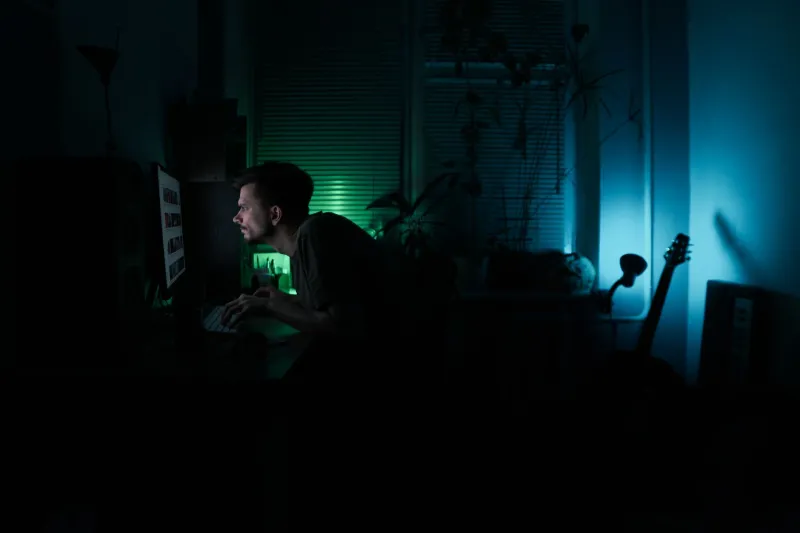
But here's what nobody mentions in the same breath: some ideas need darkness to grow.
Not secrecy for its own sake. Not gatekeeping. Just — space. Room to be wrong without an audience. Time to develop before the feedback loop kicks in and starts shaping the work based on what gets likes instead of what gets true.
If you've ever started a project that felt electric in your notebook and then watched it go flat the moment you talked about it, you already know what I'm pointing at. You just might not have had language for it yet.
Why Sharing Early Feels So Good (And Why That's the Problem)
There's a neurological reason why posting a work-in-progress feels satisfying. You get a small hit of validation — comments, reactions, encouragement — and your brain files that under "progress." But here's the thing: that hit can actually substitute for the deeper satisfaction of finishing something real.
Psychologists call this "social reality." When you tell people about a goal or share a vision publicly, your brain partially processes it as already accomplished. The external acknowledgment creates a premature sense of completion. You haven't done the work, but you've gotten a version of the reward.
For creative work specifically, this is brutal. The incubation phase — the weird, ambiguous middle period where you don't know what something is yet — requires a kind of protective fog. You need to be able to sit with not-knowing long enough for the idea to tell you what it wants to be. The second you invite outside eyes in, that fog lifts. And not always in a helpful way.
The Specific Ways Early Exposure Damages Work
Let's get concrete, because this isn't just abstract philosophy.
Feedback warps the original signal. When someone tells you they love the direction you're heading, you start heading more firmly in that direction — even if you were about to pivot into something far more interesting. Positive feedback is just as directional as negative feedback. Both of them pull you toward what the audience already recognizes rather than toward what you haven't made yet.
Documentation mode competes with creation mode. When you're filming yourself working, writing caption copy in your head, or framing your process for an audience, you're operating in two cognitive registers simultaneously. One part of your brain is making. Another part is narrating. Real creative depth tends to happen when narration goes quiet.
The comments become collaborators you didn't hire. Once you've shared early work, the reactions live in your head. "Three people said the color palette felt cold" — now that note is in the room with you whether you invited it or not. Some feedback is useful. But unsolicited, early-stage input can introduce noise into a signal you hadn't fully heard yourself yet.
You start optimizing for legibility instead of truth. Work shared publicly tends to drift toward work that can be understood quickly. Nuance gets sanded off. Complexity gets explained away. The weird, specific thing that made the idea worth pursuing in the first place can get smoothed into something more palatable — and more forgettable.
This Isn't an Argument Against Transparency
I want to be clear: sharing your process can be genuinely powerful. It builds real connection with an audience. It makes creative work feel less lonely. It can attract collaborators, clients, and communities that wouldn't find you otherwise. I'm not saying go dark and work in a bunker.
What I'm saying is that transparency has a timeline, and most people are defaulting to "as early as possible" without asking whether that's actually serving the work.
The question isn't whether to share. It's when and what.
There's a meaningful difference between sharing a finished piece with context about how it came together versus livestreaming the part where you still don't know what you're making. The first builds an audience. The second can slowly erode your ability to tolerate the not-knowing that all meaningful creative work requires.
Finding Your Own Threshold
Every project has a point at which outside input becomes useful rather than disruptive. The challenge is learning to feel where that threshold is for you, because it's different for everyone and different for every type of work.
Here are a few questions worth sitting with:
- Has this idea had enough time to surprise me yet? If you haven't been surprised by your own work, it probably isn't ready for anyone else.
- Am I sharing because it serves the project, or because I'm uncomfortable sitting with uncertainty? Posting can be a way of escaping the anxiety of the unknown. That's worth noticing.
- Would I feel relieved if this got no response? If the answer is no — if you're genuinely dependent on the reaction — that's a signal the external validation might be doing work that internal conviction should be doing.
- Can I articulate what this is trying to be, separate from what people seem to like about it so far? If the audience's response has already become your compass, you may have handed over the wheel earlier than you intended.
Protecting the Incubation Period Like It's Your Job
Because honestly? It is.
The most interesting work you'll ever make will almost certainly come from a place that felt fragile and unformed for longer than felt comfortable. The ideas worth protecting are the ones that don't yet know how to defend themselves in a comment section.
Give them time. Keep them close. Let them get weird and specific and true before you let the world weigh in.
You can document everything and share it later — once the work is solid enough to survive contact with an audience. The behind-the-scenes story doesn't expire. But the creative clarity you lose by sharing too early? That one's harder to get back.
Build in public when it serves the work. Protect the process when it serves the work. The key is that the work stays in charge — not the content calendar.