Radical Honesty Is Overrated: The Case for Keeping Some Things to Yourself
Somewhere along the way, the internet decided that the most trustworthy version of you is also the most exposed version of you. Unfiltered. Unpolished. Unedited. We were told that showing every crack in the foundation was the path to connection, and a whole generation of creators bought in completely.
And honestly? It worked. For a while.
But here's what I've been noticing lately: the more everyone commits to radical transparency, the less interesting anyone actually becomes. When every creator is pulling back the curtain on their anxiety, their imposter syndrome, their chaotic morning routines, and their messy creative process — the curtain itself stops meaning anything. You can't have a reveal without something worth revealing.
When "Being Real" Became Its Own Performance
Let's be honest about what a lot of "authenticity content" actually is: it's a carefully constructed performance of authenticity. The crying video that gets filmed, reviewed, and posted. The "raw" caption that went through four drafts. The vulnerability that gets timed to go live on a Tuesday at 11 a.m. because that's when engagement peaks.
None of that is inherently wrong. But calling it unfiltered is where things get slippery.
What started as a genuine push back against the highlight reel era has quietly become its own genre — with its own rules, its own aesthetics, and its own expectations. The "real" creator has become just as much of a character as the aspirational one. You've just swapped one costume for another.
The problem isn't vulnerability. The problem is using vulnerability as a content strategy without asking whether it's actually serving your creative vision — or just feeding the algorithm.
Mystery Isn't Dishonesty
Here's a reframe worth sitting with: choosing not to share something isn't the same as being fake.
Some of the most compelling creative figures in American culture — think directors, novelists, musicians who've maintained decades-long careers — built their mystique precisely because they understood what not to show. They let the work speak louder than their process. They gave you the finished painting, not a live stream of every brushstroke and moment of self-doubt.
There's a reason people are still fascinated by certain artists who guard their private lives. It's not that those artists are dishonest. It's that they understand something fundamental: when you give people everything, you leave nothing for them to wonder about. And wonder is what keeps people coming back.
Discretion isn't a branding flaw. In a world drowning in oversharing, it might actually be your sharpest competitive edge.
What You Lose When You Show Everything
Beyond the mystique argument, there's a practical creative cost to radical transparency that doesn't get discussed enough.
When you commit to documenting every part of your process in real time — every doubt, every pivot, every failed draft — you stop being fully present in the work itself. You're simultaneously the creator and the narrator of the creation. That split attention is expensive. It pulls you out of the deep focus where the best work actually happens.
Some ideas need darkness to grow. They need to stay private, unwitnessed, and unvalidated long enough to become something real. The moment you start performing your process for an audience, even a supportive one, you've changed the conditions of the experiment. You're no longer making the thing — you're making content about making the thing.
That's a subtle shift, but over time it shapes what you're willing to try, what you're willing to fail at, and ultimately what you're capable of creating.
The Curated Self Isn't a Lie
Here's the part that might ruffle some feathers: curation is not deception.
Every great creative thinker curates. They choose what to emphasize, what to leave out, what to amplify, and what to let fade into the background. That's not manipulation — that's craft. It's the same skill you use when you edit a piece of writing, choose a photo, or structure a presentation. You're shaping an experience for someone else.
The idea that the most curated version of yourself is somehow less true than the most chaotic version is a false binary. You contain multitudes. The question isn't whether to show all of them — it's which ones serve the story you're trying to tell and the audience you're trying to reach.
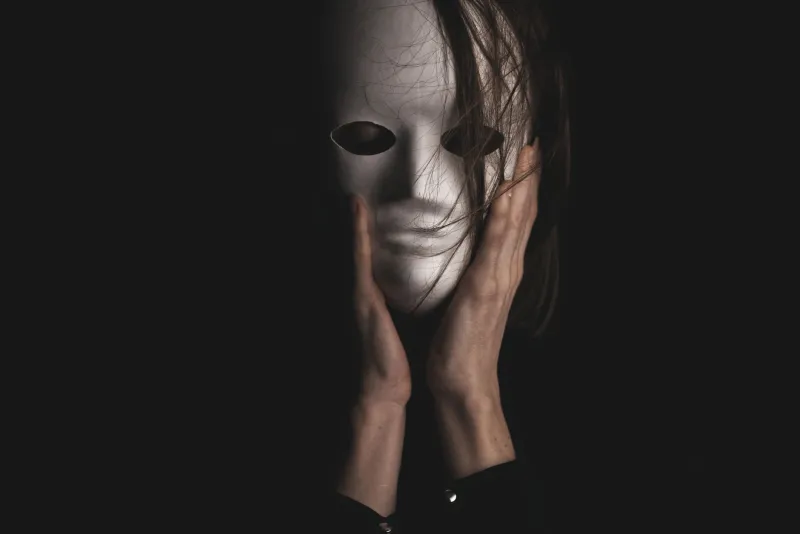
A well-curated personal brand isn't a mask. It's an editorial choice. And making strong editorial choices is what separates interesting creators from forgettable ones.
So What Do You Actually Share?
This isn't a manifesto for going dark or becoming some enigmatic recluse who never engages online. That's not realistic, and honestly, it's not that interesting either.
The real skill is developing a sense of what belongs in public and what belongs in private — and making that decision based on your creative vision, not based on what's trending in the vulnerability content space this week.
Share the insight, not necessarily the wound that produced it. Share the finished work, and maybe a glimpse of the process — but not the entire unedited journey. Share your perspective, your taste, your point of view. Those things are genuinely interesting and genuinely you.
Keep the stuff that's still forming. Keep the ideas that aren't ready. Keep the struggles that you're still inside of, that you haven't yet found the meaning in. Not everything needs to be content. Some things are just yours.
The Creators Worth Watching Know This Already
If you pay attention to the people who've built something genuinely lasting — not just a viral moment, but a real body of work and a loyal audience — you'll notice they're not the ones who shared everything. They're the ones who shared the right things.
They understood that trust doesn't come from total exposure. It comes from consistency, quality, and a clear point of view. It comes from making people feel like they're getting something real, something considered — not just something raw.
Being interesting is not the same as being an open book. In fact, the most interesting people you know in real life probably aren't the ones who tell you everything about themselves on the first conversation. They're the ones who make you curious. Who have depth you keep discovering. Who hold something back — not to be coy, but because they actually have a rich interior life they're not obligated to broadcast.
You can be that online too. You're allowed to be layered. You're allowed to be selective. You're allowed to be a little bit mysterious.
That's not inauthenticity. That's just good judgment — and right now, good judgment is genuinely rare.