Why Your Greatest Ideas Are Rotting in a Folder Nobody Will Ever Open
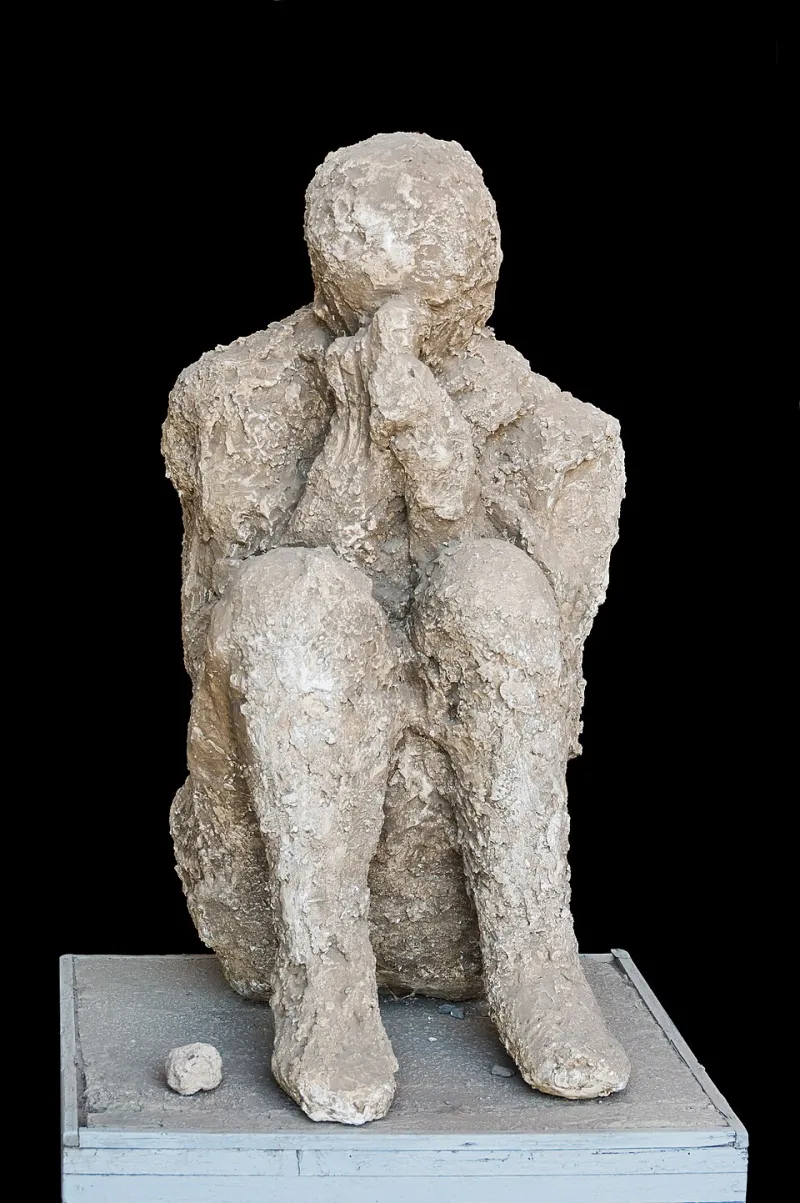
Photo: Jebulon, CC0, via Wikimedia Commons
Let me paint you a picture. It's 11:30 on a Tuesday night. You're sitting at your desk, or maybe you're in bed with your laptop balanced on your knees, and you've just written something that genuinely excites you. It feels real. It feels honest. It might even be good.
And then you close the tab.
You tell yourself you'll come back to it. Polish it up. Make it better. Wait until the moment feels right. But the moment never quite arrives, does it? That piece joins the graveyard — a growing collection of drafts, voice memos, and saved Instagram captions that represent the best of who you are and the work you've never let anyone see.
I've been there. Most creative people have. And the longer I've spent thinking about what actually separates people who make things from people who share things, the more convinced I am that the bottleneck isn't skill. It's psychological.
The Lie Your Brain Tells You About Readiness
Here's the thing about creative work: it's never finished. Not really. Every writer, filmmaker, musician, or designer will tell you the same thing — there's always one more revision, one more tweak, one more reason to hold off. The pursuit of perfection is, in many ways, just fear wearing a productivity costume.
Psychologists call this a "completion barrier" — the phenomenon where the closer a project gets to being done, the more anxiety it generates. Because an unfinished thing can't be judged. An unfinished thing lives in the safe space of potential. The moment you hit publish, post, or send, that safety disappears.
So your brain, which is wired to protect you from perceived threats, keeps moving the finish line. It whispers: not yet, not yet, not yet.
The trick is recognizing that voice for what it is — a defense mechanism, not a creative director.
Imposter Syndrome Isn't Just for Beginners
There's a widespread misconception that imposter syndrome is something you outgrow once you've accumulated enough credentials, followers, or published work. In reality, it tends to scale with your ambitions. The bigger the idea, the louder the internal critic.
Some of the most prolific creators I've encountered still feel a jolt of dread every single time they release something new. The difference is they've stopped waiting for that feeling to go away before they act. They've accepted discomfort as part of the process rather than a signal to stop.
Author Elizabeth Gilbert talks about this in terms of separating your identity from your work. Your idea is not you. If it lands badly, if people don't respond, if it gets criticized — that's feedback about the work, not a verdict on your worth as a human being. It sounds simple. It's genuinely hard to internalize. But it's the foundation everything else is built on.
The Two-Minute Exposure Drill
One of the most practical techniques I've come across for breaking the sharing paralysis is what I think of as the two-minute exposure drill. It goes like this:
Take the smallest possible version of your idea — a paragraph, a sketch, a rough audio clip — and share it somewhere low-stakes. A close friend. A private Discord server. A story that disappears in 24 hours. The goal isn't to go viral. The goal is to experience the act of sharing and survive it.
Because what most people discover is that the anticipation of judgment is far worse than the reality of it. The world doesn't stop. People don't laugh. And more often than not, someone responds with some version of "I needed to hear this." That moment — that small, quiet confirmation that your perspective has value — is often enough to crack the dam.
Do it enough times and the neural pathway starts to shift. Sharing becomes less like jumping off a cliff and more like stepping off a curb.
Reframing the Audience in Your Head
Another piece of this puzzle is the imaginary audience problem. When you're writing or creating in private, you're often unconsciously picturing the harshest possible reception — the Twitter pile-on, the condescending comment, the person from high school who will definitely screenshot it and make fun of you.
That imagined audience is a fiction. And it's a particularly cruel one because it crowds out the real people who would actually benefit from your work.
Try this instead: think about one specific person — someone you know, or someone you imagine — who needs exactly what you're making. Write for them. Create for them. When your inner critic pipes up asking "who do you think you are," answer it directly: I'm someone making something for the person who needs it.
That reframe doesn't eliminate the fear, but it gives you a reason to move through it anyway.
Done Is a Creative Decision
At some point, you have to make a choice to call a thing finished. Not because it's perfect — it won't be — but because the value of releasing imperfect work into the world almost always outweighs the value of holding onto it indefinitely.
The creative confidence gap isn't really about confidence at all. It's about action taken in the absence of confidence. It's about deciding that your perspective is worth something before you have proof that it is.
Your drafts folder is full of proof that you have something to say. The only question is whether you're going to let anyone hear it.